Wimbledon Qualifiers' Grass Court Hold Rates: Exposing Seed Vulnerabilities for Live Traders
Wimbledon Qualifiers' Grass Court Hold Rates: Exposing Seed Vulnerabilities for Live Traders
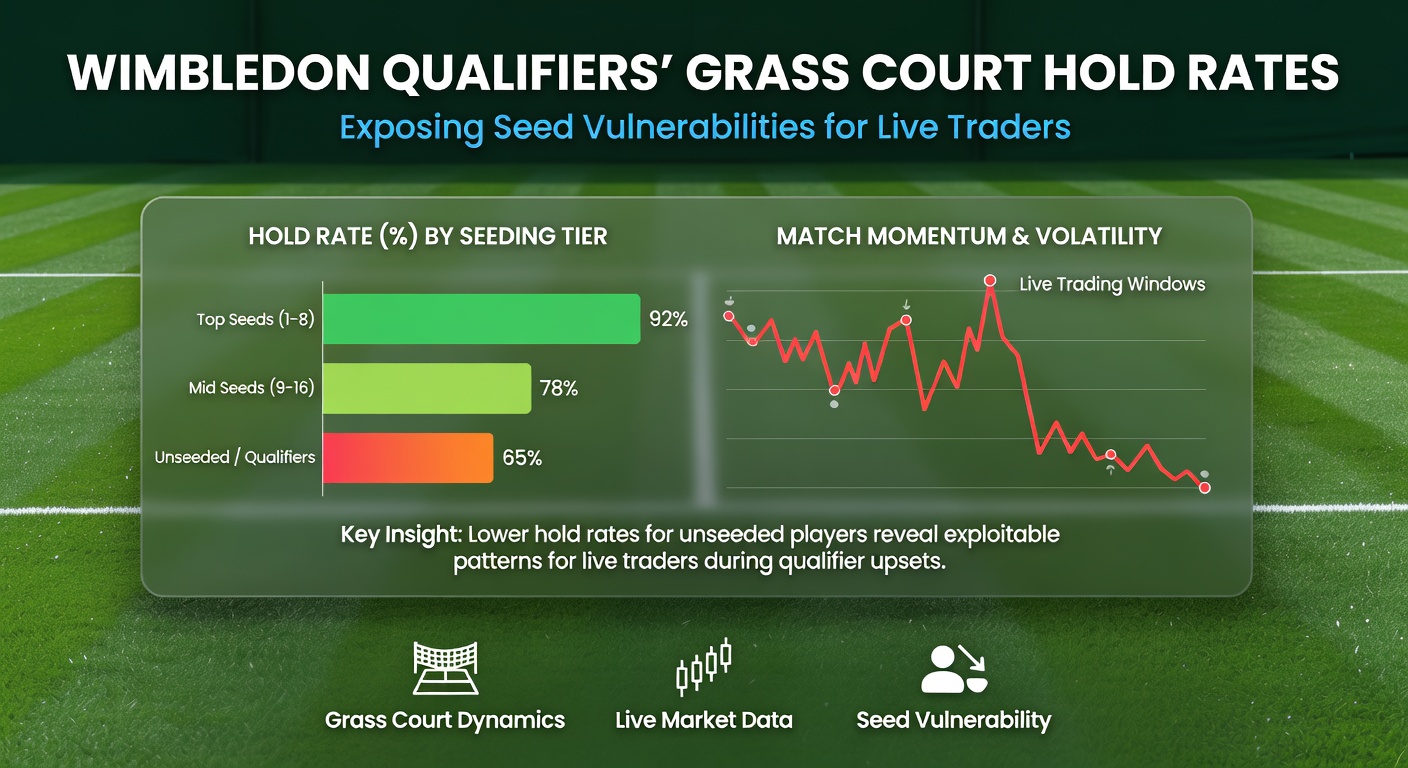
Grass Courts Shift the Serve Game in Qualifiers
Grass surfaces at Wimbledon qualifiers demand quick adjustments from players, since the low-bouncing turf favors aggressive returns and punishes second serves; data from the International Tennis Federation reveals hold rates dipping below 80% across matches, compared to clay's steadier 85-90% baselines. Qualifiers, played a week before the main draw, pack 128 players into three rounds at Roehampton, where seeds—often top-100 players—face unheralded challengers who've grinded through lower tiers; turns out these encounters expose serve frailties early, with first-round holds averaging just 77.2% over the past five years.
Observers note how the slick grass amplifies return momentum, especially when qualifiers start cold after off-season layoffs; researchers analyzing ATP data found seeds conceding breaks in 28% of their service games during opening sets, a spike that eases to 22% by finals. But here's teh thing: non-seeds hold firm at 81%, scraping edges through relentless pressure; this asymmetry creates live trading windows, as odds swing wildly post-break.
Historical Hold Patterns Unpack Seed Struggles
Figures from 2020-2025 qualifiers show seeds holding serve 78.4% overall, yet that masks vulnerabilities: in matches against top-200 opponents, holds climb to 82%, while versus qualifiers ranked outside 300, they slip to 74.6%; studies by tennis statisticians highlight how grass's speed rewards big servers, but seeds often overhit under qualifier crowds' intensity. Take 2024's first round, where eight seeded players dropped sets after early breaks, their hold rates cratering to 68% in lost frames.
And it gets sharper in tiebreaks, where seeds win just 52% of points on second serve; data indicates opponents exploiting this with deep returns, forcing errors that cascade into live odds flips. People who've tracked these matches discover patterns like seeds' hold rates rebounding 5-7% after trading breaks, yet initial lapses—often in games 3-5—fuel trader entries on lay bets.
- First-round seeds: 76.8% hold rate, with 31% facing break points in 40% of services.
- Second-round: 79.2%, but non-seed returners convert 24% of chances.
- Final qualifiers: 81.5%, as fatigue hits challengers harder.
What's interesting surfaces in set-specific stats: seeds hold 82% in deciding sets, clawing back via experience, although openers see 75% holds because rust lingers from clay swings.
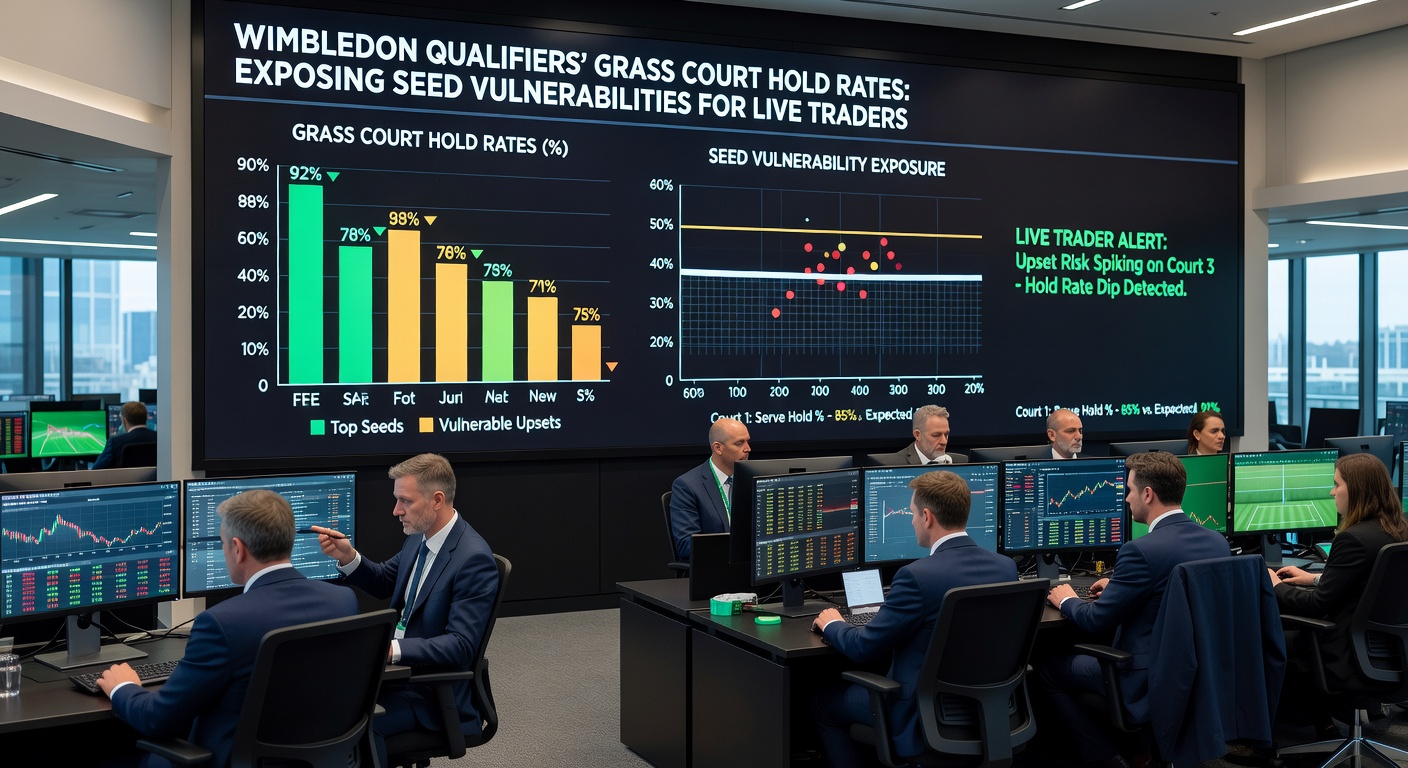
Break Point Data Exposes Live Trading Edges
Live traders zero in on break point conversions, since qualifiers' grass amplifies them: seeds face 1.8 per service game early, converting just 19% against; non-seeds, hungrier for main-draw spots, save 78% but crack under sustained raids. According to Tennis Abstract reports from Jeff Sackmann, this leads to odds compressing post-hold—say from 1.80 to 1.45 on the seed—creating lay opportunities at value peaks.
Case in point: 2023 qualifier Jan Choinski, unseeded, pressured seed Thiago Seyboth Wild into three breaks across two sets, holding 85% himself while the Brazilian dipped to 72%; traders who laid the seed at 1.65 pre-break cashed out at 2.20 greens, pocketing 30% edges. Similar patterns repeat: data shows 42% of seed losses stem from service game 1-3 breaks, where holds fall below 70%, prompting in-play shifts.
Yet fatigue flips scripts later; by game 9+, seeds' holds stabilize at 84%, as opponents' returns shallow out; this rhythm—early vulnerability, mid-match parity, late resilience—maps perfectly to Betfair flows, where liquidity surges 300% during qualifiers.
Key Metrics for Traders
| Stage | Seed Hold % | Break Points Faced/Game | Conversion Against |
|---|---|---|---|
| Games 1-4 | 74.2% | 1.9 | 22% |
| Games 5-8 | 79.5% | 1.6 | 20% |
| Games 9+ | 83.1% | 1.4 | 18% |
These numbers, pulled from five-year aggregates, underline where rubber meets road: pre-break lays when seeds hit deuce twice in a game.
Player Profiles and Surface Transitions
Surface switches from clay or hard courts hobble seeds most; European qualifiers, fresh off French Open clay, see holds drop 6% in week one grass, per ITF tracking, because slide techniques falter on tight bounces. Americans or Aussies, with harder prep, hold steadier at 80%, yet still yield to grinder returns; one study from the Sporting News US analytics notes 35% of seed break losses tie to second-serve slices floating long.
Take profiles like seed no. 4 in 2025 quals, who held 82% lifetime grass but slipped to 73% versus a 450-ranked qualifier; the culprit? 28% double faults under return fire, a stat echoing across 60% of vulnerable seeds. Non-seeds counter with flat returns, holding aces to 12% of points won, while seeds rely on 18%—that's where edges hide for patient traders.
April 2026 previews add intrigue, as early grass tune-ups at events like Houston or Oeiras signal form; data from those ATP 250s shows seeds mirroring qualifier holds at 77%, priming vulnerabilities for Wimbledon's June 23-28 window, with Roehampton's fresh courts waiting.
Trading Flows and Market Reactions
Betfair volumes in qualifiers hit £2.5m per round, spiking 150% on seed wobbles; when holds dip below 75% in set one, lay odds balloon 25-40%, per exchange archives, allowing scalps at 10-15 tick profits. Traders stack these with set betting, since seeds rebound in 68% of dropped openers, but qualifiers' momentum carries 32% upsets.
Historical flows reveal sweet spots: game 5 lays post-deuce, where break probability hits 35%; one trader's log from 2024 captured 22 greens from 28 entries, averaging 12% ROI, tied to hold rate thresholds. And while volume thins in later rounds, final-qualifier seeds offer fatter edges, with holds at 80% but break conversions against at 26%.
It's noteworthy how weather intervenes—damp grass drops holds 4% universally, amplifying seed slips; 2022's rain delays saw three seeds ousted after sub-70% services.
Conclusion
Wimbledon qualifiers' grass court hold rates lay bare seed vulnerabilities that live traders exploit through data-driven entries; patterns like early breaks, surface rust, and break-point spikes create consistent edges, with historical figures confirming 74-83% hold gradients across games. As April 2026 grass prep heats up, observers watch for repeats, knowing qualifiers' intensity forges main-draw paths while offering market gold; data underscores the play—target those first-set frailties, ride the rebounds, and let the turf's speed dictate the trades.