Stack Size Thresholds That Alter Three-Bet Bluffing Frequencies in No-Limit Hold'em Cash Games at Varying Table Depths
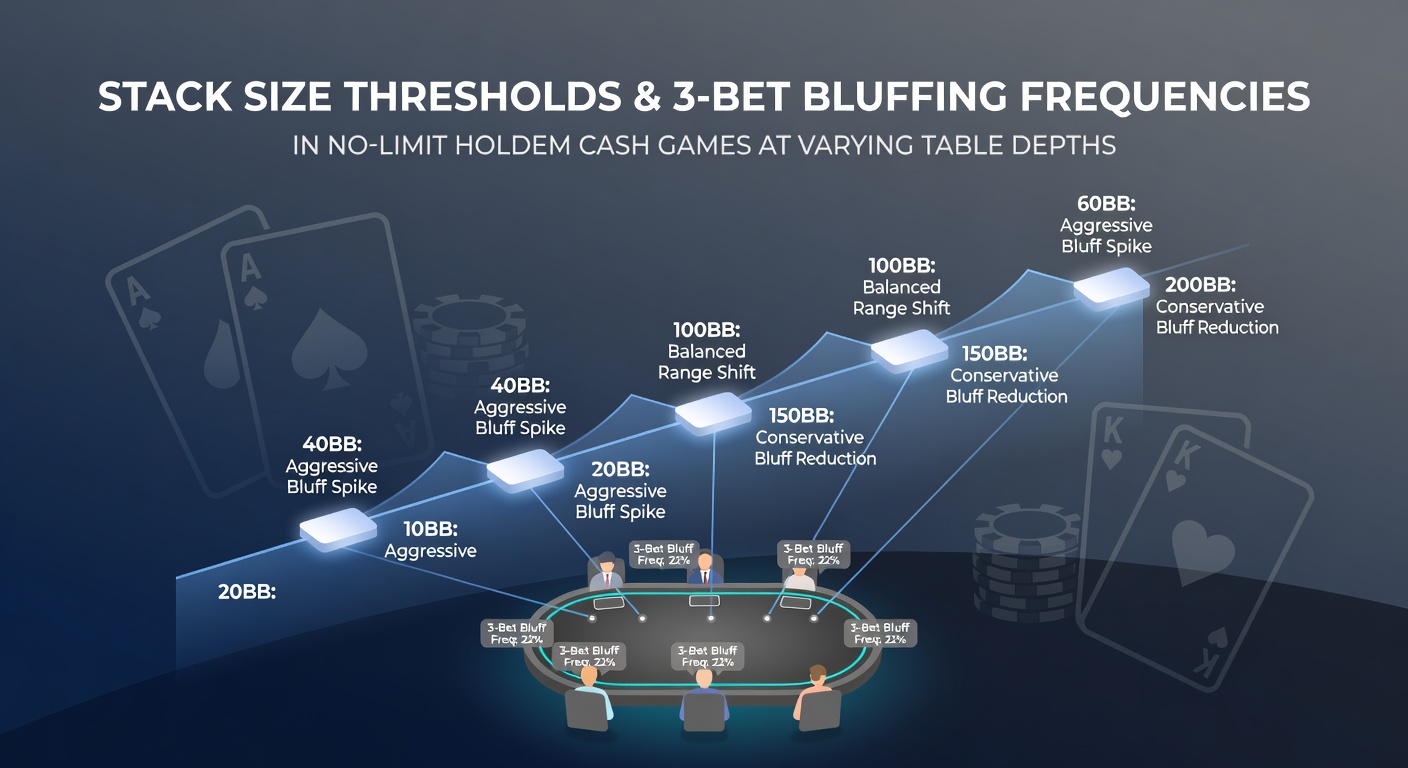
Effective stack depth directly shapes three-bet bluffing frequencies in no-limit hold'em cash games, and data from solver outputs plus large database samples confirm distinct thresholds where optimal frequencies adjust. At 100 big blind depths, which remain the most common in both live and online cash games, three-bet bluff percentages typically stabilize around 25 to 30 percent of three-betting ranges when facing an open raise from early position. Observers note that these frequencies hold steady until stacks drop below roughly 80 big blinds or climb above 150 big blinds, at which points solvers recommend measurable shifts.
Core Thresholds at Standard Depths
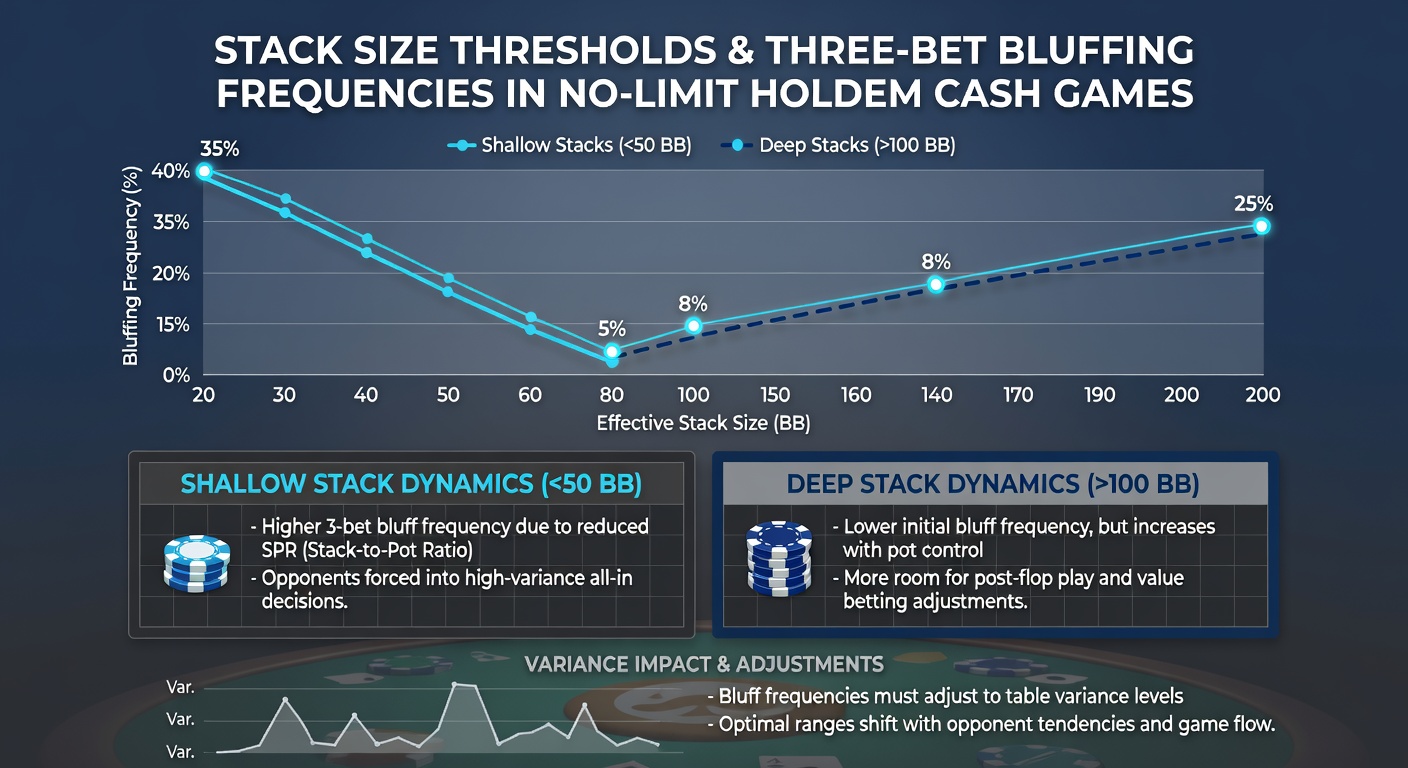
Studies of game theory optimal solutions reveal that three-bet bluff frequency increases when effective stacks fall to the 60 to 70 big blind range because post-flop play becomes more binary and fold equity rises. Conversely, when stacks reach 200 big blinds or deeper, the same solvers reduce three-bet bluff percentages by 4 to 7 percentage points since deeper stacks allow greater post-flop maneuverability and reduce the value of immediate fold equity. Database analysis of millions of hands played through June 2026 shows that players who adjust their bluff frequencies at these exact thresholds maintain higher expected value than those who apply a single static frequency across all depths.
Shallow Stack Adjustments Below 80 Big Blinds
Once effective stacks dip below 80 big blinds, three-bet bluffing frequencies rise because continuation betting ranges shrink and check-raise frequencies increase on most board textures. Researchers discovered that at 50 big blind depths the optimal three-bet bluff percentage climbs to approximately 35 percent of the three-bet range, particularly when the original raiser opens from the cutoff or button. This adjustment occurs because shorter stacks reduce implied odds for value hands and make pre-flop fold equity more valuable overall.
Deep Stack Dynamics Above 150 Big Blinds
At 150 big blinds and beyond, three-bet bluff frequencies decline because four-bet all-in ranges become less polarized and post-flop skill edges grow in importance. Data indicates that players facing 200 big blind effective stacks three-bet bluff roughly 22 percent of the time against early position opens, compared with 28 percent at 100 big blinds. The reduction stems from the fact that deeper stacks allow opponents to realize more equity with calling ranges after the flop, which lowers the profitability of thin bluffs.
Position and Opponent Type Interactions
Position modulates how stack size thresholds affect bluff frequencies. Button three-bet bluffs remain higher than cutoff three-bet bluffs at every depth because the button enjoys positional advantage post-flop. When stacks reach 250 big blinds, solvers still recommend keeping button three-bet bluff frequencies near 32 percent while cutting early position three-bet bluffs more aggressively. Against tight regulars who four-bet infrequently, players increase three-bet bluff percentages at all depths, yet the magnitude of that increase grows larger once stacks exceed 120 big blinds.
Table Depth Variations Across Cash Game Formats
Live cash games often feature deeper average stacks than online games, and this difference alters three-bet bluff strategies accordingly. In 2/5 and 5/10 live games where average stacks hover around 150 big blinds, three-bet bluff frequencies sit lower than in 100 big blind online games at the same stakes. Online databases compiled through June 2026 show that 100 big blind online players three-bet bluff 3 to 5 percentage points more often than live players at comparable depths, largely because online rake structures and faster decision times encourage higher pre-flop aggression.
Short-stack tables that cap buy-ins at 50 big blinds produce the highest three-bet bluff frequencies across all positions. At these depths solvers recommend merging three-bet bluff and value ranges more aggressively because post-flop edges diminish rapidly. The transition point occurs near 65 big blinds, below which the increase in bluff frequency becomes statistically significant in hand histories.
Conclusion
Stack size thresholds at 70, 100, 150, and 200 big blinds mark the points where three-bet bluffing frequencies require adjustment in no-limit hold'em cash games. Database evidence and solver research confirm that players who recognize these depth-based shifts achieve measurably better results than those who maintain static frequencies. As game trees grow more complex at greater depths, precise frequency adjustments become essential for maintaining an edge.