Seasonal Roster Rotation Impacts on NBA Regular Season Total Lines During Holiday Congestion Periods
Mapping the Holiday Schedule Crunch
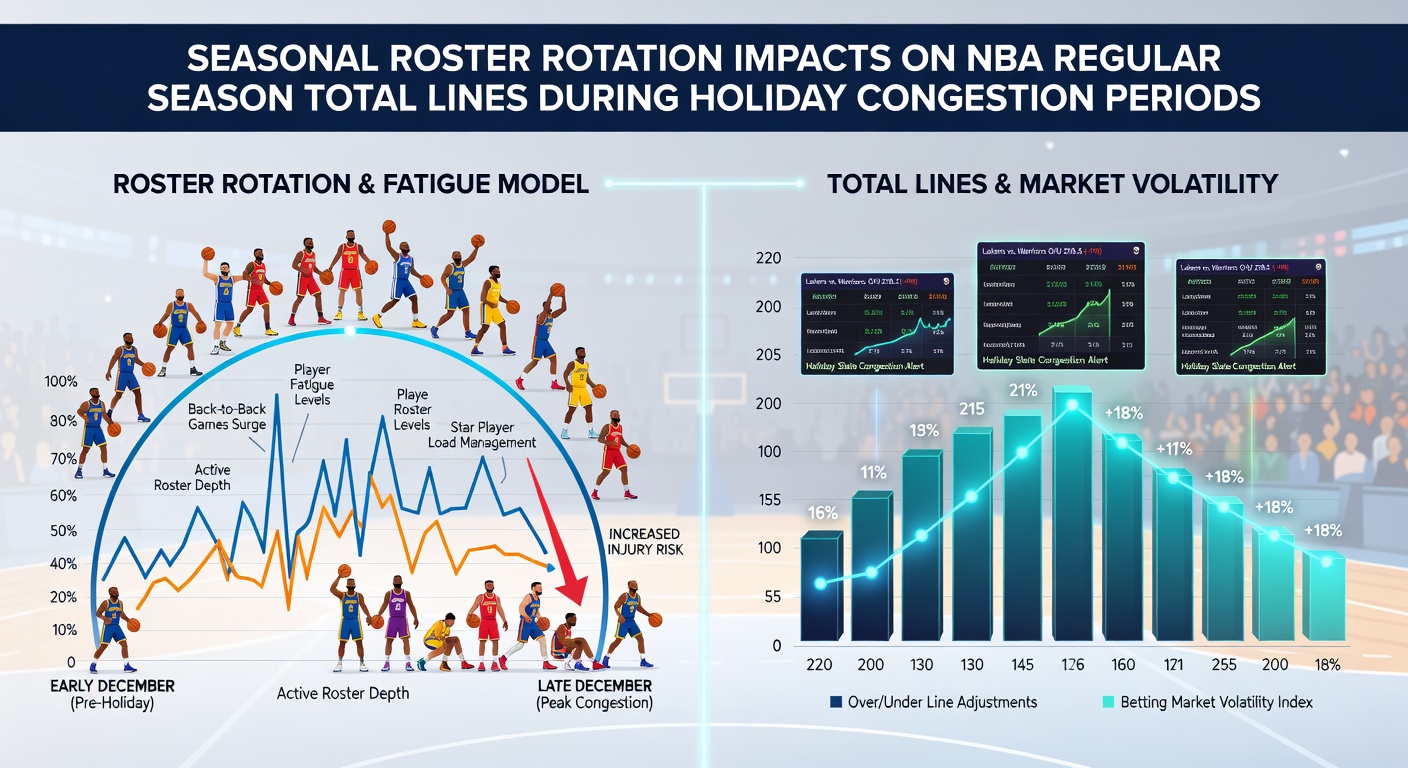
NBA teams face a compressed calendar each November through January when back-to-backs and three-games-in-four-nights clusters appear on the official league schedule, and front offices respond by cycling players in and out of the lineup to manage minutes. Data from the league’s tracking systems shows that average player availability drops several percentage points during these stretches compared with non-congested weeks, while coaching staffs publish nightly injury reports that list rest as the primary reason for absences. Observers note that these planned reductions alter the composition of both starting fives and bench units, which in turn shifts the pace and efficiency numbers that sportsbooks use to set total lines for upcoming games.
How Rotation Decisions Shape Team Efficiency
Coaches distribute minutes across deeper rosters once the schedule density increases, and historical play-by-play logs reveal measurable changes in offensive rating and defensive rating when star players sit. When a team rests multiple rotation regulars on the same night, second-unit lineups often post lower effective field-goal percentages and slower transition frequencies, yet the same squads sometimes increase three-point attempt volume because younger players receive extended opportunities. Researchers at sports analytics centers have tracked these patterns across multiple seasons and found that totals markets adjust within hours of injury-report releases, with sportsbooks moving the posted number by two to four points in either direction depending on which side of the ball loses production.
Line Movement Patterns Around Key Dates
Thanksgiving week and the Christmas-to-New-Year window produce the highest concentration of games played on consecutive nights, and betting data aggregators record larger than average line movements once rotation news surfaces. Sportsbooks receive sharp action from professional bettors who monitor practice reports and flight-tracking accounts, and the resulting adjustments appear in real time on major betting exchanges. Figures released by industry monitoring services indicate that under totals receive more early limit action when high-usage players are listed as questionable, while overs attract volume once lineups stabilize with deeper but less efficient personnel. These shifts occur before tip-off and create measurable discrepancies between opening and closing totals across different sportsbooks.
Statistical Correlations Between Rest and Scoring Output
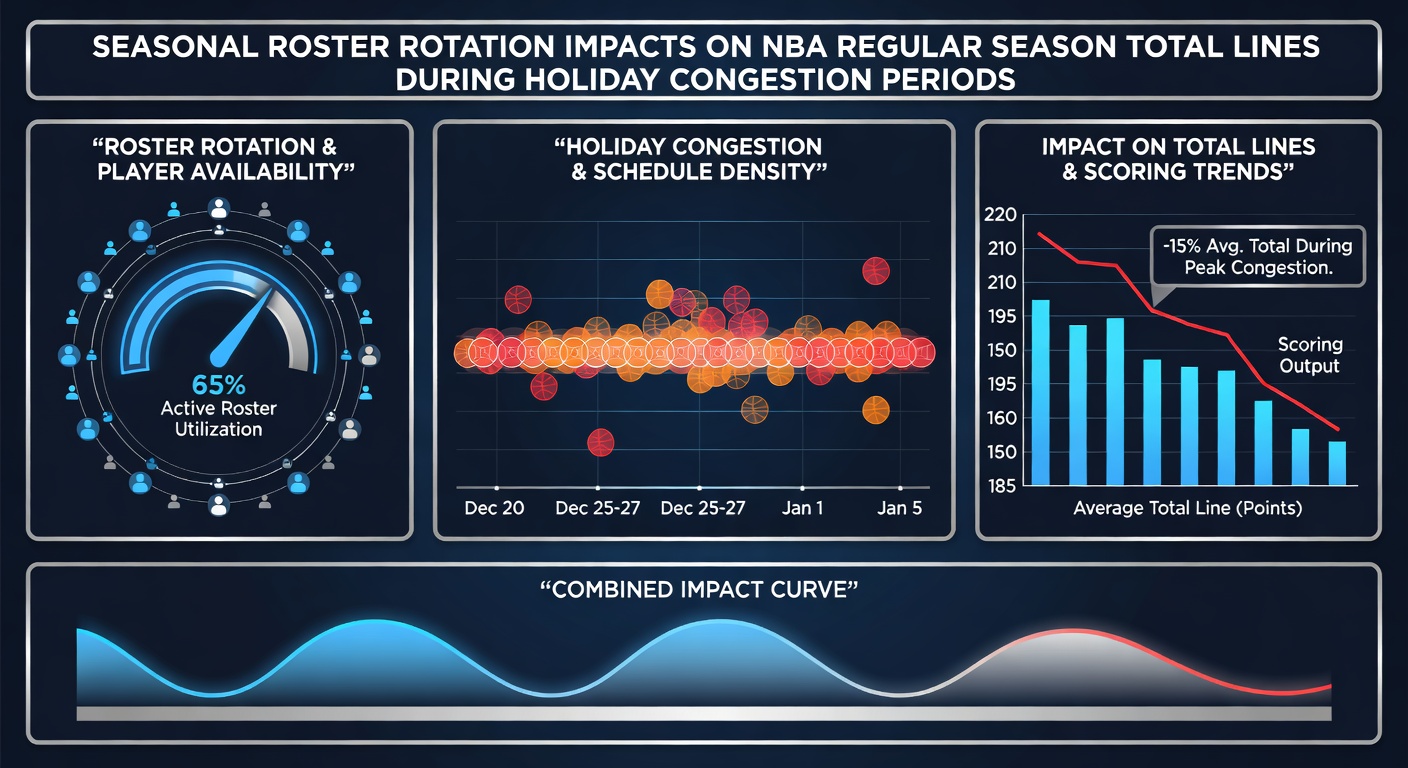
Box-score databases demonstrate that teams resting at least two starters average fewer points per game than their season-long norms, yet opposing defenses also post lower steal and block rates because the rested team plays at a slower tempo. Regression models built on play-by-play data control for opponent strength and travel distance, and the results show that total points decline by roughly three to five points on average when both clubs employ significant rest strategies. Conversely, when only one side rotates heavily, the rested team’s defensive rating sometimes improves because fresher legs reduce transition opportunities for the opponent, which can push combined scoring totals back toward the median. Analysts who publish these models on academic and industry sites emphasize that the effect size varies by team depth and by the specific holiday window examined.
Geographic and Travel Factors Interacting with Rotations
West Coast teams traveling east for holiday games encounter additional fatigue variables that interact with roster decisions, and schedule analysts have documented longer recovery times after cross-country flights during December. When coaching staffs announce rest for veteran players on the second night of a back-to-back following such travel, the projected pace drops further and sportsbooks respond by shading totals downward. Data from the league’s travel logs combined with player-tracking metrics shows that games involving multiple cross-country participants and announced rest produce the largest negative deviations from preseason total projections. These patterns appear consistently across seasons and provide quantifiable inputs for totals modeling.
Market Efficiency and Information Timing
Betting exchanges update totals lines continuously once official injury reports drop, and timing studies reveal that the largest price corrections happen between 90 and 120 minutes before tip-off. Professional syndicates that aggregate multiple data streams, including practice footage and warm-up reports, often secure positions before recreational bettors react to the same news. Regulatory filings from North American gaming commissions indicate that handle volume on NBA totals spikes during holiday weeks, with a measurable portion of that volume concentrated in the hours immediately following rotation announcements. The resulting line stability or continued movement depends on how quickly sharp money exhausts available limits at each price point.
Conclusion
Seasonal roster decisions during NBA holiday congestion periods produce measurable effects on game totals because reduced availability of high-usage players alters both offensive creation and defensive resistance. Historical datasets show consistent directional impacts once rest patterns become public, and sportsbooks incorporate those patterns into real-time line adjustments. Observers tracking the 2025-26 season into May 2026 note that similar congestion clusters reappear each winter, giving analysts repeated opportunities to test updated models against fresh injury-report and totals data.