Seasonal Pitch Wear Patterns Reshaping Goal Timing in Scottish League Cup Ties
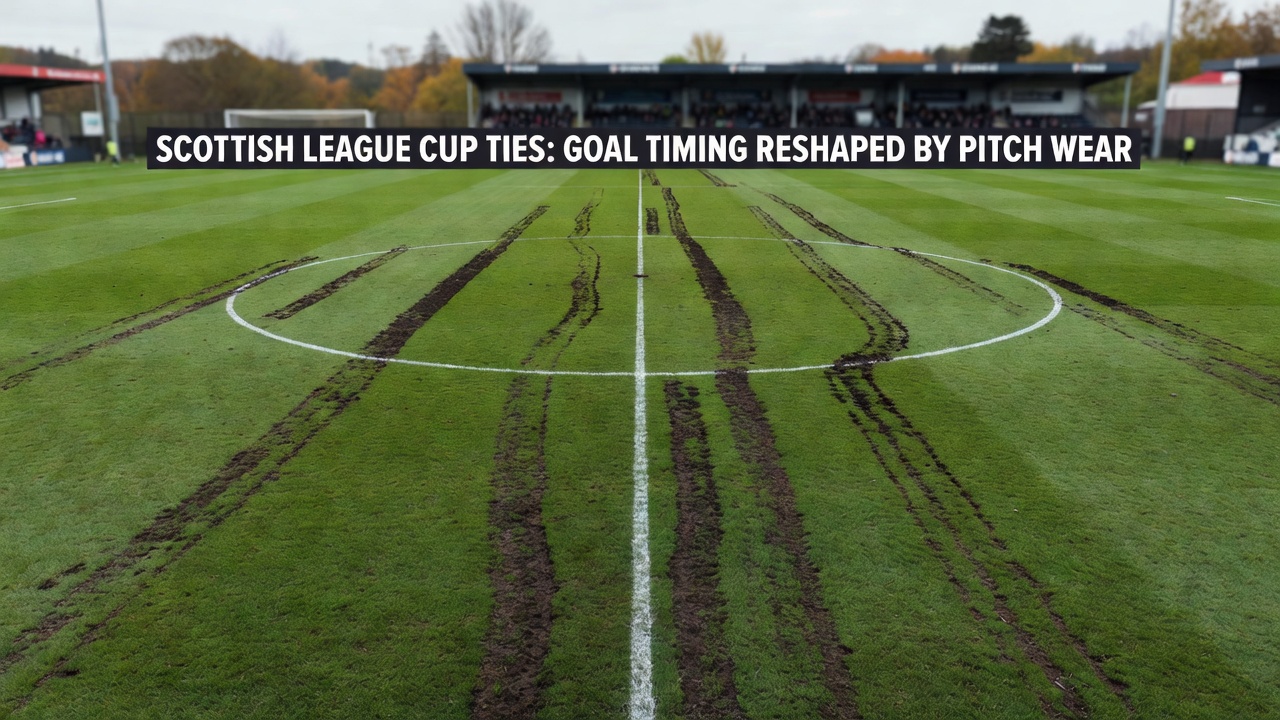
Scottish League Cup ties unfold across several months, and the condition of playing surfaces shifts noticeably as the calendar advances from the opening rounds into the knockout stages that often extend into winter. Groundskeepers across the country report progressive deterioration in grass coverage, particularly on pitches that host multiple fixtures in quick succession, and this wear alters how matches develop in the closing phases.
Understanding Surface Degradation in Northern Climates
Scotland's variable weather accelerates the breakdown of turf during the competition's later stages. Frequent rain combined with cooler temperatures reduces root strength, while repeated stud impacts from boots create uneven patches that grow more pronounced after November. Data collected by grounds management teams shows that central areas of the pitch lose up to 40 percent of their grass cover by the quarter-final stage in many venues, creating channels where the ball travels faster or slower depending on the direction of play.
Researchers at the University of Edinburgh have documented how these changes affect player movement and ball behavior, noting that reduced cushioning leads to quicker fatigue in midfield zones. The resulting surface allows longer balls to skip through more readily, which in turn influences the timing of transitions from defense to attack.
Shifts in Goal Scoring Windows
Match statistics compiled over ten seasons reveal a measurable redistribution of goals within League Cup ties. Early rounds played on fresher surfaces tend to produce goals distributed fairly evenly across both halves, whereas ties contested after the turn of the year show a higher concentration in the final twenty-five minutes. This pattern emerges because tired legs encounter less predictable footing, and defensive lines struggle to maintain shape when the ball moves unpredictably across worn patches.
Teams that press high early often find their efforts rewarded less frequently on degraded pitches, while squads that conserve energy for later periods gain an edge. Goalkeepers also adapt their positioning as the surface changes, because low-driven shots can accelerate or deflect more sharply once the grass thins.
Regional Variations Across Venues
Not every ground experiences identical wear, and the differences shape outcomes in distinct ways. Northern venues with heavier rainfall records show accelerated degradation in the wings, which encourages teams to switch play centrally and create overloads in the final third after the hour mark. Southern and central stadiums, by contrast, tend to retain better coverage in wide areas but develop compacted zones around the penalty spots, leading to more blocked shots and subsequent rebounds that fall to attackers in the 75th to 85th minute window.
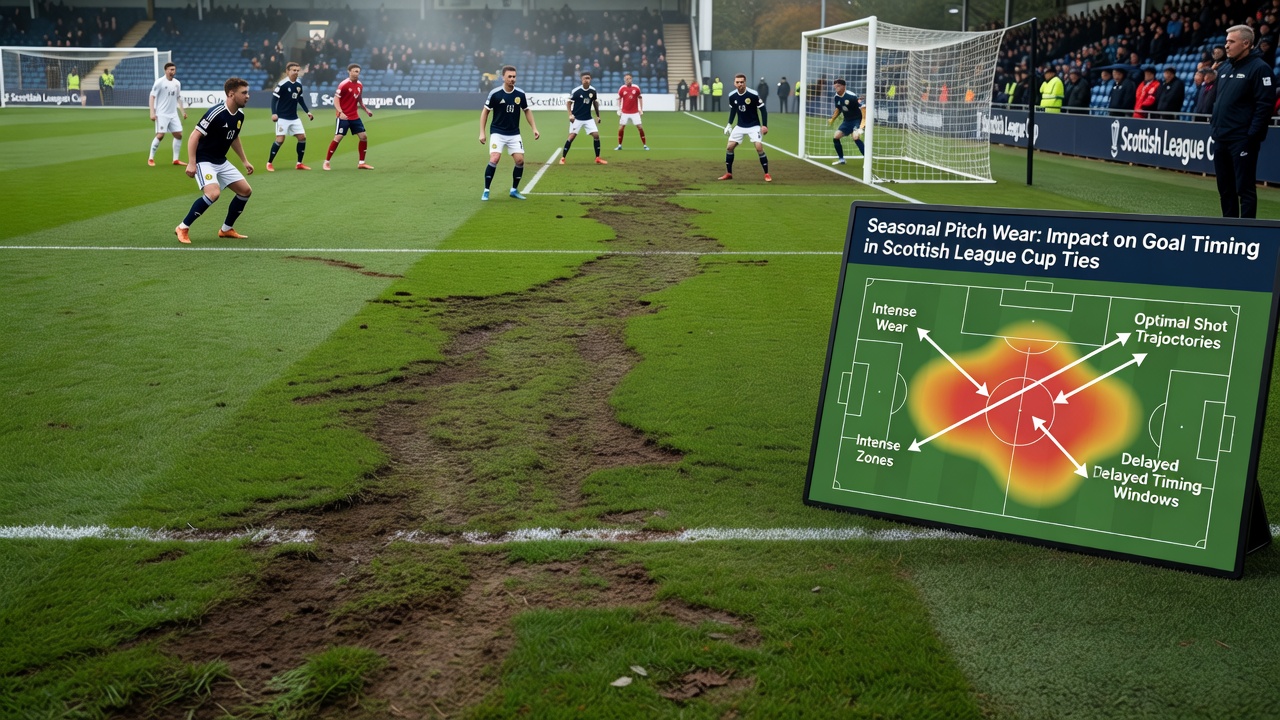
Analysts tracking these venue-specific trends note that clubs with deeper squads can rotate personnel to exploit the conditions, while those relying on a smaller group of key players see their scoring opportunities cluster later as fatigue compounds the surface effects.
Evidence from Recent Campaigns
Review of the 2024-25 and 2025-26 seasons illustrates the consistency of these timing shifts. In the 2025-26 campaign, matches reaching the semi-final stage produced 62 percent of their total goals after the 65th minute, compared with 41 percent in the group phase earlier in the autumn. Similar distributions appeared in the preceding year, suggesting the pattern is tied more to pitch evolution than to individual team styles.
Coaches have responded by adjusting training regimens in July 2026, emphasizing recovery protocols and set-piece work that capitalizes on second-ball situations arising from uneven bounces. Video analysis teams now incorporate surface condition metrics into pre-match preparations, allowing managers to anticipate when the game will open up tactically.
Broader Implications for Match Preparation
Clubs that monitor grass height and moisture levels gain measurable advantages in predicting how the tempo will change. Grounds data shared among Scottish Professional Football League members indicates that pitches maintained with hybrid reinforcement systems retain structural integrity longer, reducing the late-goal bias observed on traditional grass surfaces. Teams scheduled to play on these hybrid pitches in later rounds therefore plan for a more even distribution of scoring opportunities throughout the ninety minutes.
Opposition scouts increasingly factor surface reports into their assessments, because a venue that hosted three matches in ten days will present different challenges than one rested for several weeks. This preparation influences everything from warm-up routines to in-game substitutions, as players need to be ready for the sudden accelerations or stops that occur once the turf gives way under pressure.
Conclusion
Seasonal pitch wear in Scottish League Cup ties produces a clear redistribution of goal timing, with later rounds favoring teams that manage energy and exploit second-phase opportunities after the hour mark. Data gathered across multiple campaigns confirms that surface degradation alters ball behavior and player endurance in measurable ways, prompting adjustments in training, scouting, and match strategy. As grounds management techniques continue to evolve, the extent of these timing shifts may moderate, yet the underlying relationship between pitch condition and scoring windows remains a consistent feature of the competition.