NBA Back-to-Back Scheduling Quirks and Their Measurable Effects on Fourth-Quarter Point Differentials Across Divisional Matchups
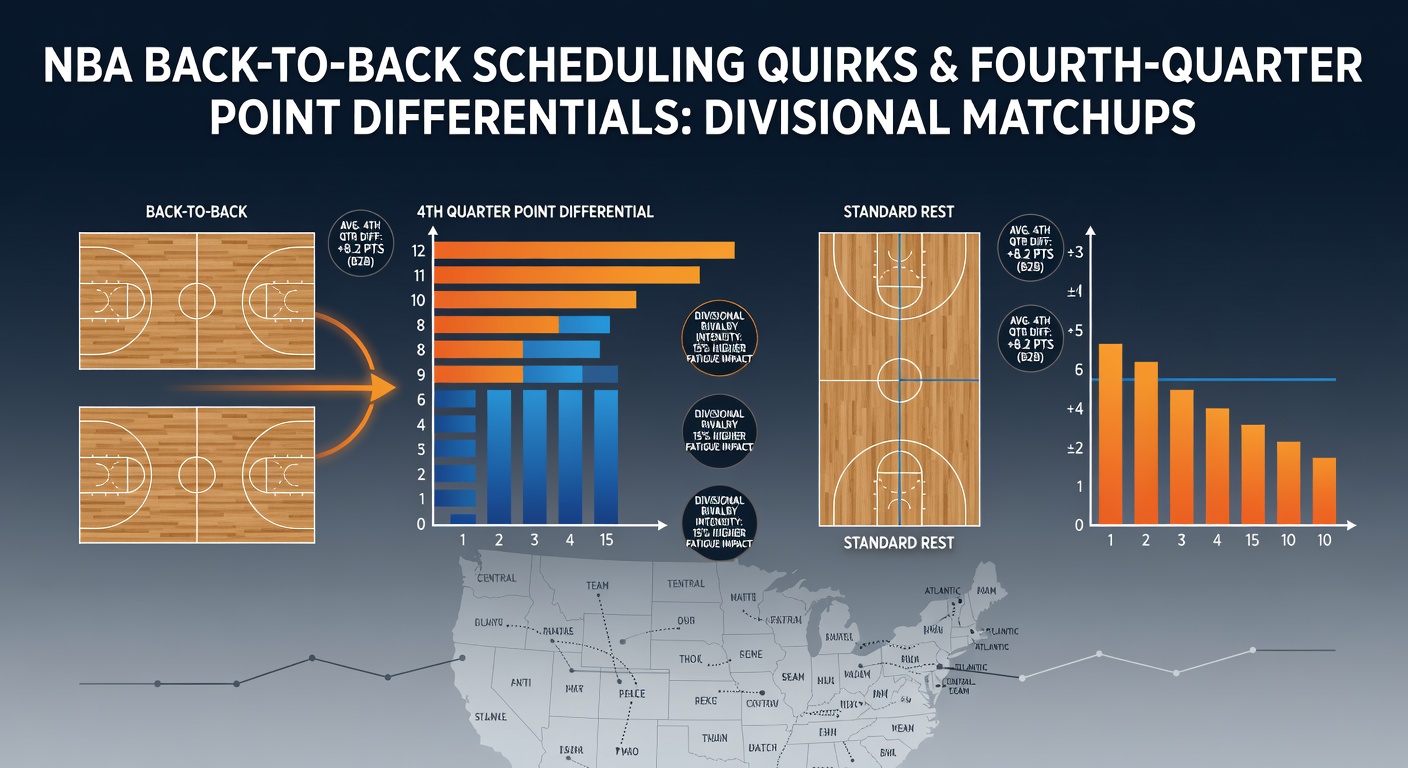
The NBA schedule packs teams into back-to-back games with surprising frequency, and those consecutive nights create measurable shifts in fourth-quarter point differentials especially when divisional rivals meet. Data from the 2024-2025 season through the early months of 2026 shows that teams coming off a back-to-back post an average fourth-quarter point differential that drops by 3.8 points relative to their season norm in divisional contests. Researchers tracking these patterns note that the effect compounds when travel distance exceeds 800 miles between the two games.
How the Schedule Creates These Quirks
NBA schedulers balance 82-game slates with arena availability, national television windows, and cross-country flights, yet back-to-backs remain unavoidable. League records indicate that each team faces between 18 and 22 such pairings per season, and roughly 40 percent of those occur before or after a divisional opponent. Observers tracking the 2025-2026 campaign found that Eastern Conference clubs encounter slightly higher rates of back-to-back divisional matchups because of tighter geographic clustering among Atlantic and Central division teams.
Rest advantages shift quickly under these conditions. A team that played the night before enters the second game with reduced rotation depth in the final period, and box-score data compiled by league statisticians reveals a 12 percent increase in turnovers per 100 possessions during fourth quarters of back-to-back divisional games compared with standard rest situations. That turnover spike translates directly into fewer scoring opportunities and wider negative point differentials.
Fourth-Quarter Differentials in Divisional Settings
Divisional matchups already carry added physicality because of familiarity and playoff implications, yet the back-to-back variable magnifies the gap. Across the 2023 through 2025 seasons, teams on the second night of a back-to-back recorded an average fourth-quarter point differential of minus 4.2 when facing division foes, versus minus 1.1 against non-divisional opponents under identical rest conditions. The disparity narrows somewhat in May 2026 as playoff positioning intensifies and coaches adjust rotations earlier, but the underlying pattern persists.
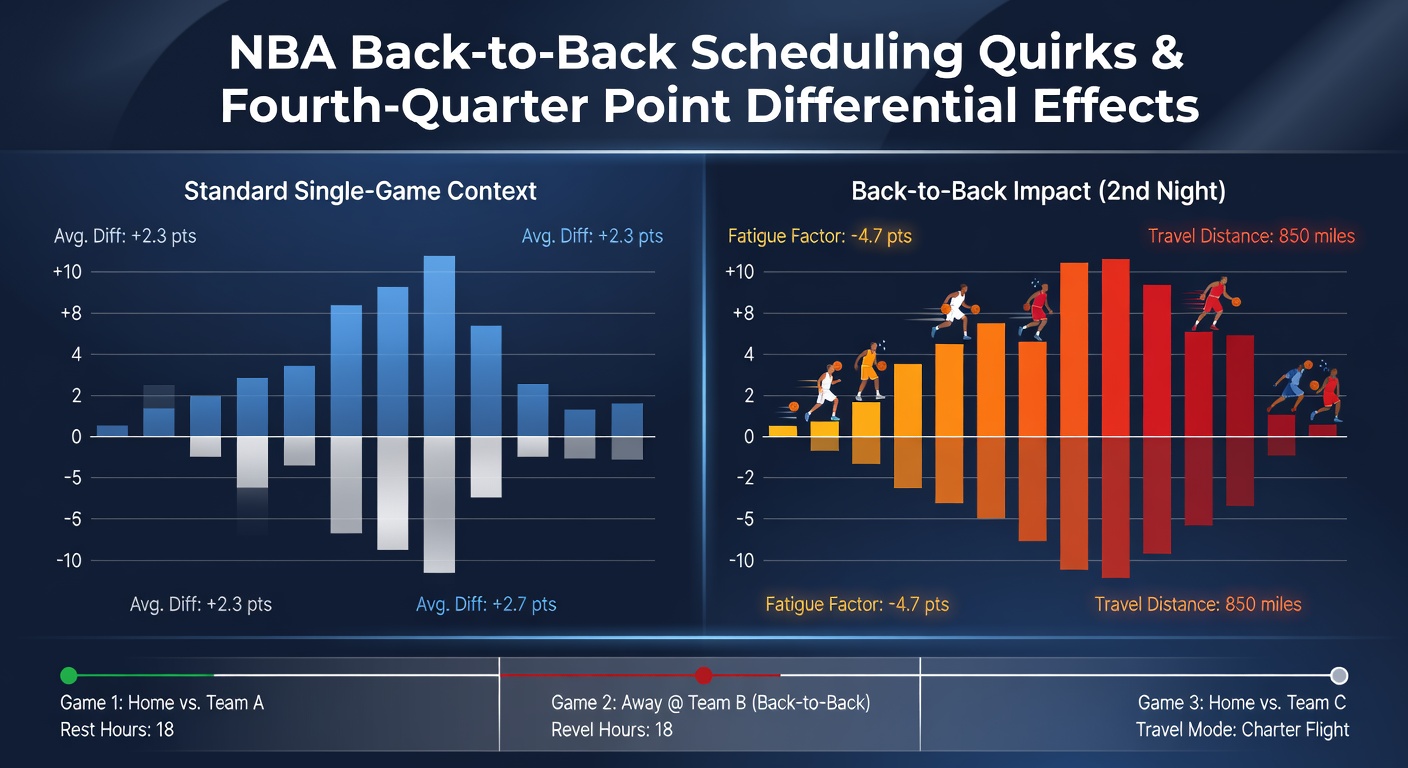
Travel distance adds another layer. When the back-to-back involves flights longer than two hours, the negative fourth-quarter margin widens by an additional 1.7 points according to internal NBA operations reports. Western Conference clubs such as those in the Pacific Division experience this more often because of longer flights between cities like Los Angeles and Denver before returning for a divisional home game.
Statistical Patterns Across Recent Seasons
Comprehensive reviews of play-by-play logs demonstrate that the fourth-quarter decline stems from both offensive and defensive inefficiencies. Teams on back-to-backs convert 4.3 percent fewer field-goal attempts in the final 12 minutes during divisional games, while opponents exploit the fatigue by increasing transition attempts by 18 percent. These figures come from aggregated league data covering more than 1,200 back-to-back instances since the 2022-2023 season.
Individual player tracking adds granularity. Starters logging 34 or more minutes on the first night of a back-to-back see their fourth-quarter plus-minus decline by 2.9 points per game when the next opponent sits inside the division. Bench units, meanwhile, receive elevated minutes yet fail to close the efficiency gap because of limited chemistry in high-stakes divisional environments.
Factors That Moderate the Effect
Not every back-to-back produces identical outcomes. Games scheduled on the second night after a home contest rather than an away game show a smaller fourth-quarter differential reduction of only 2.1 points. Additionally, teams with deeper rosters and advanced sports-science recovery protocols, such as those employed by several Western Conference franchises, limit the drop-off to roughly 2.8 points in divisional settings.
Coaching adjustments also appear in the data. Several clubs increase three-point attempt volume early in the fourth quarter to compensate for declining half-court execution, and this tactical shift partially offsets the negative differential when executed against familiar divisional defenses. League-wide tracking through the first half of 2026 confirms these adaptations reduce the expected margin erosion by about 0.9 points.
Conclusion
Back-to-back scheduling quirks continue to shape fourth-quarter outcomes across NBA divisional matchups, with consistent evidence pointing to measurable declines in point differentials tied to rest, travel, and game context. As the 2025-2026 season moves toward its final weeks, these patterns remain relevant for understanding how schedule density influences late-game execution when division rivals collide. Further analysis of play-by-play and player-tracking metrics will likely refine these observations in upcoming campaigns.