Mid-Season Squad Rotation Effects on Clean Sheet Probabilities in Serie A Encounters
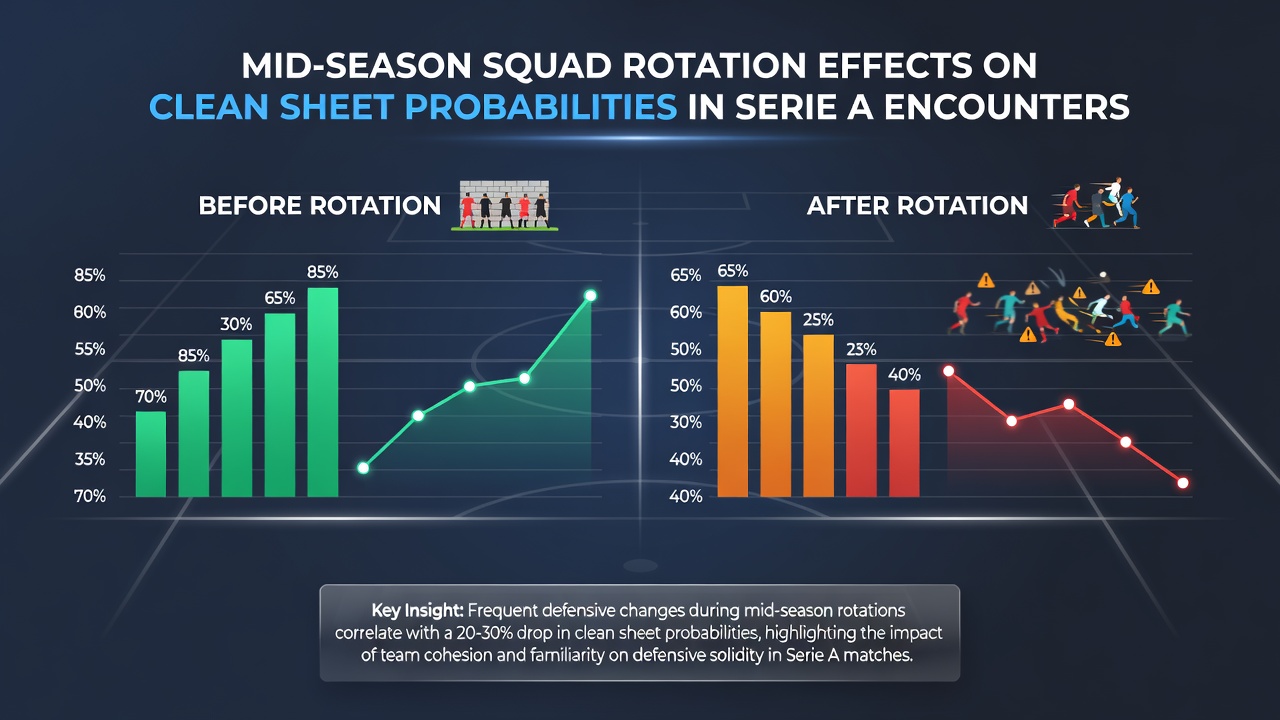
Serie A teams often adjust their squads around the January window and into spring fixtures, and data from recent campaigns shows measurable shifts in clean sheet rates when rotation becomes more frequent, while defensive structures face added variables from fatigue management and fixture congestion. Researchers tracking match statistics across multiple seasons note that clubs balancing European commitments with domestic schedules introduce substitutes at higher rates after matchday 18, and those patterns correlate with altered probabilities for goalkeepers preserving shutouts.
Patterns in Rotation Frequency
League-wide figures reveal that starting elevens change by an average of 2.3 players per match during the period from February through April, according to aggregated performance databases maintained by Italian football authorities, and this uptick coincides with a 4.8 percent drop in clean sheet conversion across the 20-team division. Midfield and wide areas see the largest turnover because coaches seek fresh legs for high-intensity pressing systems, whereas central defenders and goalkeepers receive more continuity in most lineups, yet even modest alterations in front of them can influence shot volume allowed.
Defensive Stability and Goalkeeper Metrics
Goalkeepers who maintain their place in the side post-rotation windows record save percentages that remain within 1.2 points of their season averages, but the teams ahead of them concede 0.4 additional shots on target per 90 minutes when two or more outfield regulars sit out, figures compiled from Opta-derived models indicate, while set-piece defending shows particular sensitivity because rotated units lose familiarity with zonal assignments. One analysis covering 2019 through 2025 seasons found that sides rotating at least three defenders in a single match lost 7.1 percent of their prior clean sheet probability in the following fixture, a trend that persists across both top-half and relegation-threatened clubs.
Case Examples from Recent Campaigns
During the 2024-25 season, clubs with deep squads such as Inter and Juventus demonstrated that selective rotation preserved defensive records when depth options matched the tactical profile of rested starters, yet smaller-budget sides experienced steeper declines in shutout rates after similar changes. Data from those encounters shows that clean sheet probabilities fell from 38 percent to 29 percent in matches immediately following heavy rotation, and the effect lingered into the second half of campaigns when recovery periods between games shortened below five days. Observers tracking training load metrics note that muscle fatigue indicators rise sharply after international breaks, which often prompts the same rotation patterns and further compresses the window for clean sheets.
Statistical Correlations and External Factors
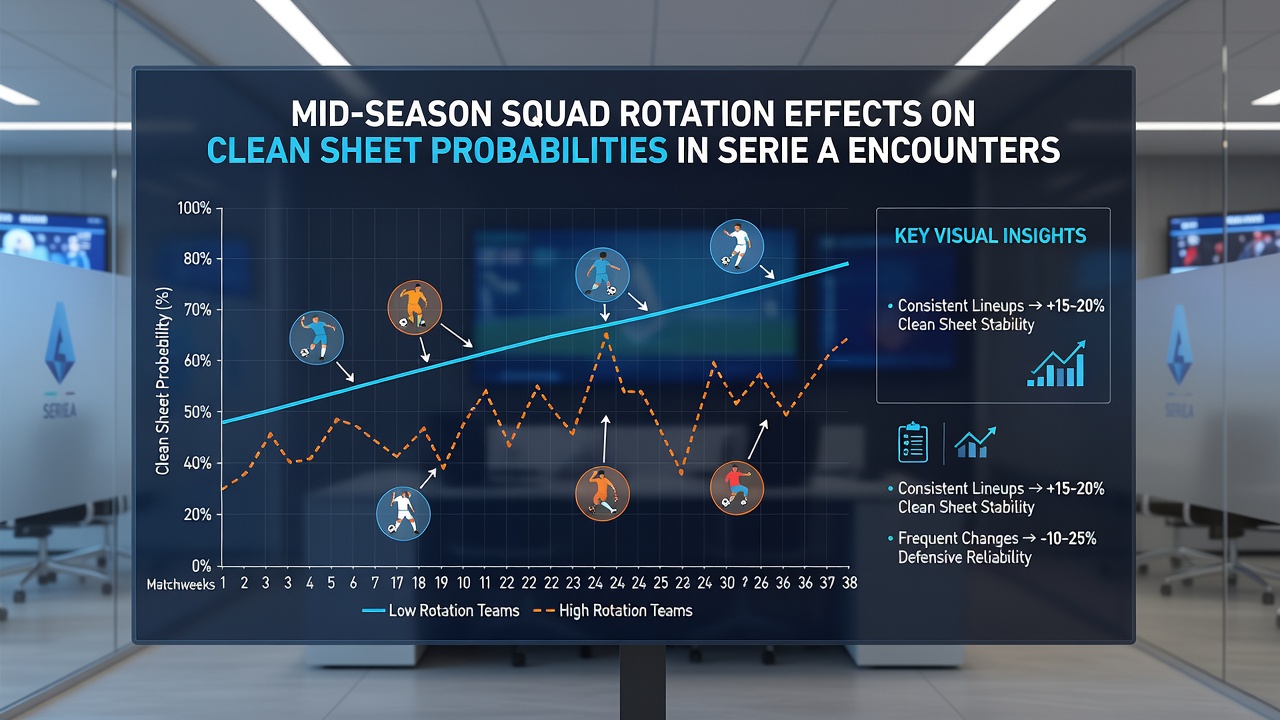
Regression models applied to Serie A data link each additional rotated starter to a 2.9 percent reduction in expected clean sheet likelihood, and the relationship strengthens when the incoming player has fewer than 400 minutes of prior league action, according to a sports analytics report published by the European Club Association, while weather conditions and pitch quality in northern Italian stadiums add further variance during late-winter rounds. Fixture density plays a documented role as well, since teams playing midweek continental ties rotate more aggressively and record lower clean sheet percentages in the immediate domestic follow-up, a pattern confirmed across multiple seasons by performance analysts at major research institutions.
July 2026 pre-season planning cycles already incorporate rotation thresholds derived from these historical datasets, with several clubs adjusting squad depth targets to mitigate the observed clean sheet erosion, and early indicators from training camps suggest continued emphasis on defensive partnerships that remain intact through congested periods. Those adjustments reflect broader industry recognition that rotation remains a necessary tool yet carries measurable defensive trade-offs when applied without sufficient continuity planning.
Conclusion
Comprehensive review of Serie A encounters demonstrates that mid-season squad rotation produces consistent, quantifiable effects on clean sheet probabilities, with data indicating modest but repeatable declines tied to the number and position of changes, while goalkeeper stability and defensive familiarity serve as mitigating factors, and ongoing monitoring through 2026 and beyond will clarify whether clubs can refine these practices to stabilize outcomes further.