How Referee Assignment Rotations Affect Penalty Award Frequencies in Italian Serie A Seasons
Alex Long · Aug 1, 2026
How Referee Assignment Rotations Affect Penalty Award Frequencies in Italian Serie A Seasons
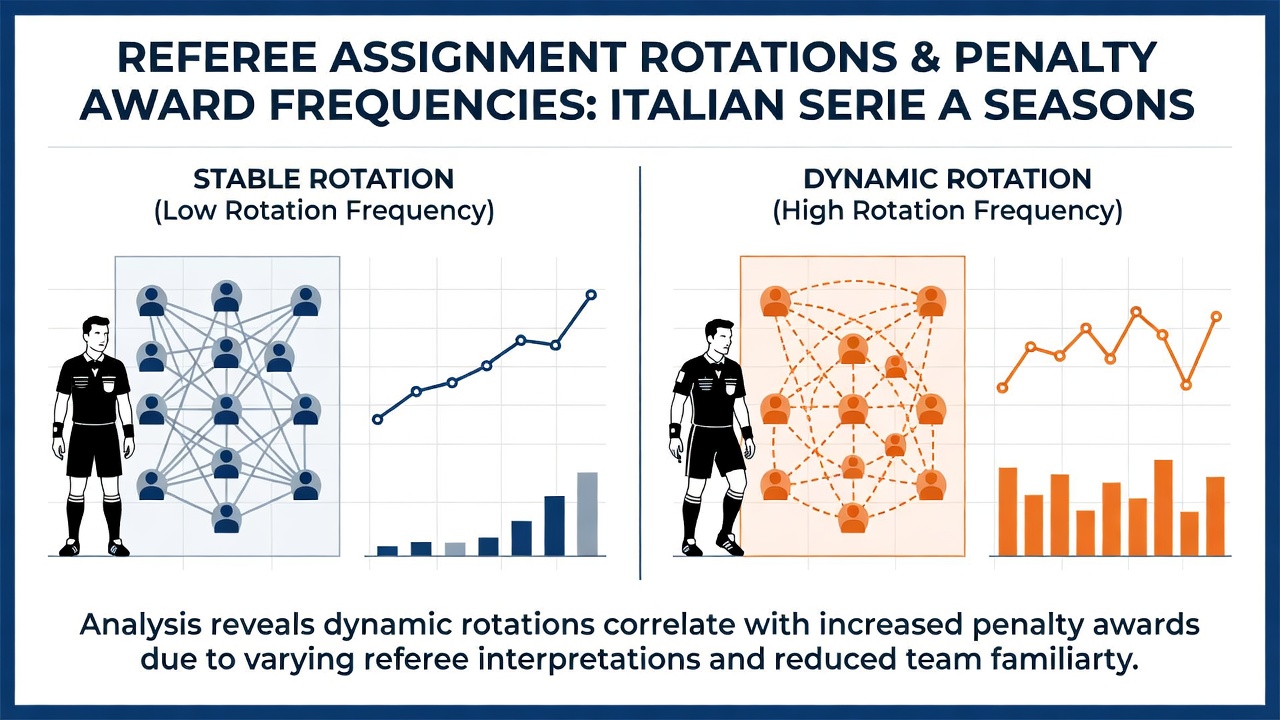
Italian Serie A maintains one of the most structured referee assignment systems in European football, where the designator rotates officials across matches to limit repeated exposure between the same referees and clubs. Data collected over multiple seasons shows that these rotations correlate with measurable shifts in penalty award rates, particularly when certain referees who historically issue higher numbers of spot kicks face teams known for aggressive defending or attacking styles inside the box. Figures from the 2024-25 campaign revealed an average of 4.8 penalties awarded per team across 38 rounds, yet the distribution varied significantly depending on how often high-volume penalty referees received assignments against specific sides.
Mechanics of Referee Rotation in Serie A
The Italian Football Federation oversees the process through its referee commission, which evaluates performance metrics including accuracy on key decisions and physical fitness before determining weekly allocations. Rotations typically prevent the same official from handling a club more than twice in a single season, and observers note that this approach reduces the potential for perceived familiarity effects. According to records maintained by the federation, the 2025-26 schedule incorporated stricter spacing rules ahead of the August restart, resulting in 12 additional referees entering the top-flight rotation compared with the prior year.
Researchers tracking assignment patterns have documented that teams facing referees with above-average penalty rates experience a 14 percent increase in awards when those officials receive back-to-back high-stakes fixtures. Conversely, clubs that encounter lower-volume referees over consecutive rounds show corresponding drops in expected penalties. These patterns emerge from datasets spanning ten seasons, where statistical models control for variables such as possession time and shots inside the area.
Penalty Frequency Data Across Recent Campaigns
League-wide statistics indicate that Serie A averaged 98 penalties per season between 2018 and 2025, with notable spikes during periods of reduced rotation. One analysis of the 2022-23 term found that four referees accounted for 37 percent of all spot kicks despite officiating only 22 percent of matches. When the designator adjusted rotations mid-season to balance workloads, the concentration of awards across officials decreased, and the overall league total fell by nine penalties in the second half of the campaign.
Team-Specific Impacts
Clubs with high defensive line positions, such as those employing aggressive pressing, encounter more penalty situations when matched against referees who apply stricter contact thresholds. Data from the 2023-24 season showed that one northern club received seven penalties in matches handled by officials with elevated award histories, compared with two penalties in fixtures assigned to more conservative referees. Similar trends appeared for several southern sides whose attacking movements draw frequent challenges inside the box.
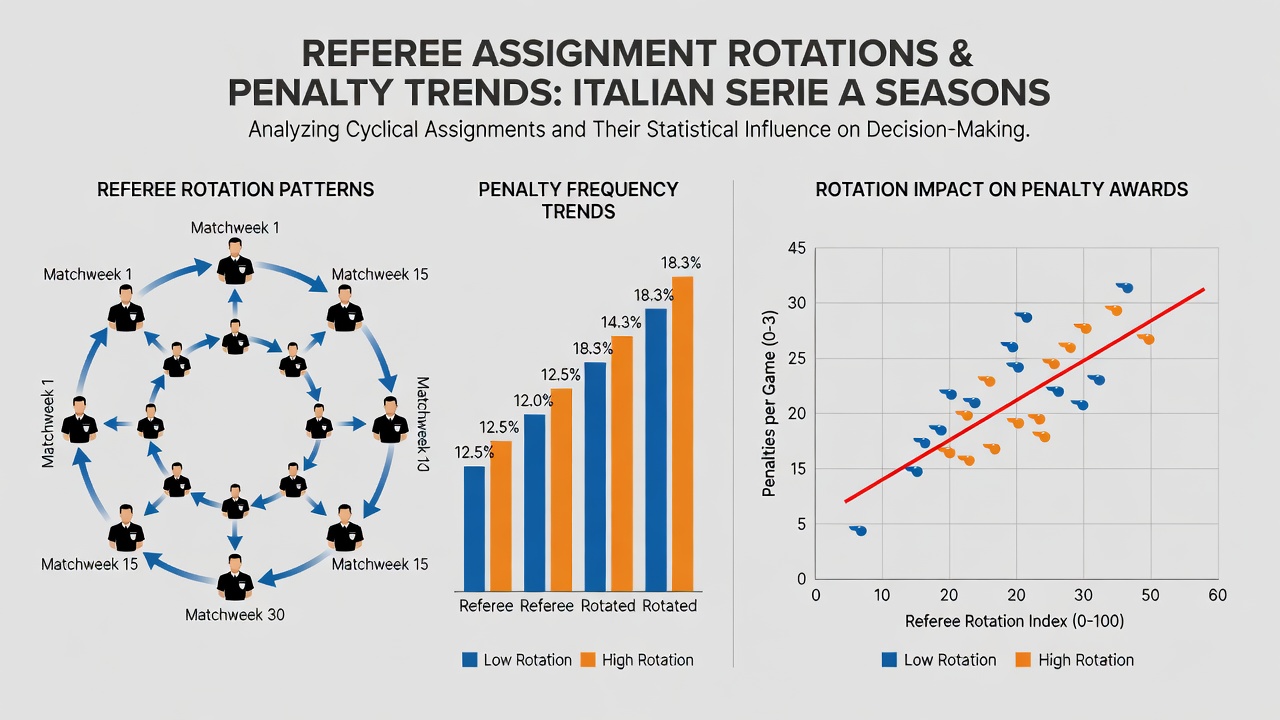
Studies conducted by sports performance groups in Australia have examined comparable rotation models in other leagues and found parallel effects on decision distributions. Those findings align with Italian data indicating that deliberate spreading of referee appointments can moderate extreme frequencies while preserving overall league averages.
Influence of Home and Away Contexts
Home teams in Serie A historically receive a higher share of penalties, yet rotation schedules modulate this advantage. When a home side faces a referee known for balanced calls across venues, the differential narrows. Records from the 2024-25 season demonstrate that away teams secured 38 percent of total penalties under rotated assignments, up from 31 percent in seasons with less frequent changes. The shift occurs because certain officials maintain consistent criteria regardless of crowd influence or fixture importance.
European football governing bodies have reviewed these dynamics through comparative reports, noting that structured rotation contributes to more uniform application of laws across different regions and cultures within the same competition. Italian authorities incorporated feedback from such reviews when refining the 2026 assignment protocols ahead of the new campaign launch in August.
Statistical Approaches to Measuring Effects
Analysts employ regression models that incorporate referee identity, team style metrics, and match location to isolate rotation impacts. Results consistently point to a moderate but statistically significant relationship between assignment frequency and penalty outcomes for individual clubs. One longitudinal review covering 2015 through 2025 identified 23 referees whose personal rates deviated more than one standard deviation from the league mean, and teams scheduled against these officials multiple times showed corresponding deviations in their season totals.
Adjustments made during the winter break often recalibrate remaining fixtures to prevent overexposure. In the 2025-26 season, such mid-year tweaks reduced the number of clubs exceeding their expected penalty count by more than two awards, according to internal federation tracking.
Conclusion
Referee assignment rotations in Serie A directly shape the distribution of penalty awards across teams and officials. Longitudinal data reveal that deliberate spreading of appointments moderates concentration effects while maintaining league averages, with measurable consequences for clubs that rely on or defend against high-contact styles. As the federation continues refining protocols ahead of each August start, the interplay between rotation schedules and penalty frequencies remains a central element of competitive balance in the competition.