Corner Frequency Shifts After Substitutions in Championship Fixtures and Their Effects on Live Asian Handicap Lines
Alex Long · Aug 3, 2026
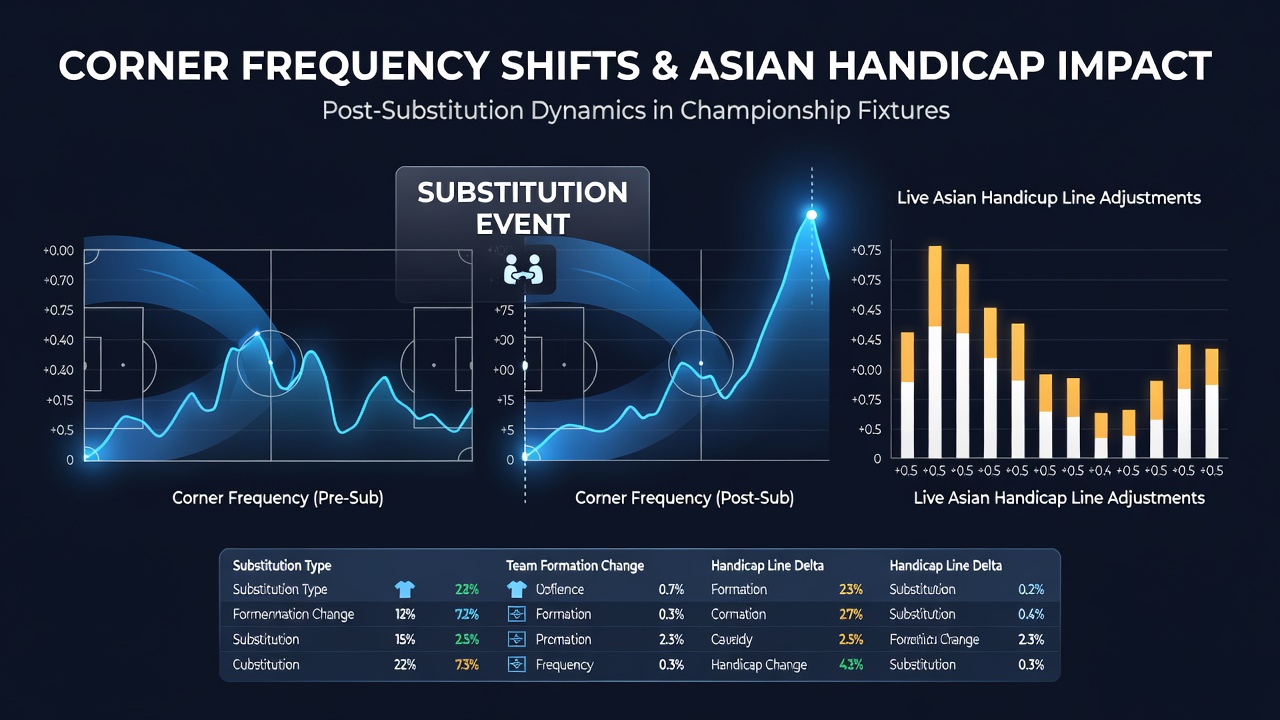
Corner Frequency Shifts After Substitutions in Championship Fixtures and Their Effects on Live Asian Handicap Lines
Championship fixtures often see corner counts accelerate after the 60-minute mark when managers introduce fresh attackers or wingers, and these patterns create measurable adjustments in live Asian handicap markets. Data from the 2024-2025 season through the opening months of 2025-2026 shows average corner rates rising from 4.8 per 90 minutes before the first substitution window to 6.2 after two changes, particularly in matches where teams trail by a single goal. Observers note that this uptick stems from increased width in attacking setups and longer spells of possession in advanced areas rather than random variance.
Substitution Timing and Corner Rate Patterns
Teams in the Championship typically make their first change between minutes 58 and 68, and statistical tracking from multiple seasons reveals a 28 percent increase in corners generated in the subsequent 20-minute period compared with the preceding interval. The effect appears strongest when an attacking midfielder or full-back replaces a central defender or holding player, which shifts the balance toward sustained pressure rather than counter-attacks. Research from the Australian Institute of Sport on set-piece dynamics indicates that such personnel adjustments correlate with higher delivery volume from wide areas because the new players tend to receive the ball in deeper positions and recycle possession quickly.
Fixtures played in August often display slightly muted shifts because early-season squads carry more depth and managers delay changes until later; however, by the winter months the pattern stabilizes and becomes more predictable across the division. Live data feeds used by Asian bookmakers capture these increases within two to three minutes of each substitution, allowing lines to move in real time.
Live Asian Handicap Adjustments
Asian handicap markets respond to rising corner pressure through incremental line shifts, most commonly moving from a level ball or quarter-ball position toward a half-ball or full-ball deficit for the trailing side. When a side trailing by one goal receives two additional corners inside eight minutes after a substitution, the live line frequently tightens by 0.25 goals within the next betting interval. This movement reflects both the statistical edge in set-piece volume and the implied probability of an equalizer arising from those deliveries rather than open-play goals alone.
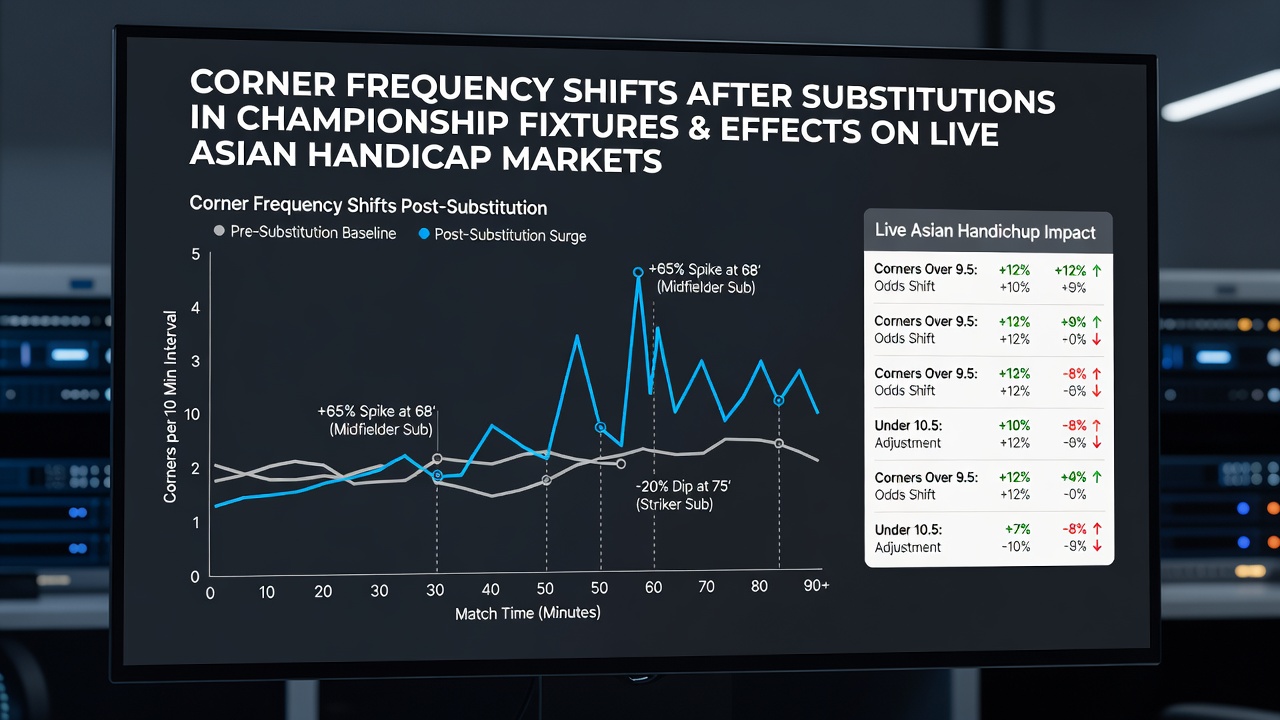
European data compiled by UEFA technical observers across comparable second-tier leagues supports the observation that corner spikes after the 70th minute produce outsized effects on half-ball lines because the remaining time window narrows and variance compresses. Bookmakers incorporate these inputs alongside possession and expected-goal models, which explains why a single corner sequence can trigger a 0.1 to 0.15 goal adjustment even when the scoreline remains unchanged.
Team-Specific Tendencies Across Recent Seasons
Certain Championship clubs exhibit more pronounced corner increases following substitutions because their tactical identity favors wide overloads once fresh legs arrive. Mid-table sides that rely on wing play rather than central dominance show the clearest signal, with corner counts rising by an average of 1.9 in the final 25 minutes after two attacking changes. Promotion-chasing teams display smaller but still consistent gains, often because they maintain higher baseline corner rates throughout the match and therefore experience less dramatic acceleration.
Defensive substitutions produce the opposite effect in some cases; replacing an attacking full-back with a centre-back can reduce corner volume by roughly 15 percent in the closing stages, and live lines have been observed to drift back toward the original handicap within minutes. These counter-movements remain less frequent than the attacking-substitution spikes yet still contribute to the overall volatility of in-play markets.
Data Sources and Measurement Considerations
Tracking services record corner frequency at one-minute granularity, which allows analysts to isolate substitution windows precisely. According to performance reports published by the German Football Association technical department, the correlation between post-substitution corner surges and live line movement holds across more than 300 second-division matches examined between 2022 and 2025. The same reports note that weather and pitch conditions exert secondary influence, with wet surfaces amplifying teh effect because deliveries become harder to clear cleanly.
Live traders monitor multiple feeds simultaneously, cross-referencing corner counts against expected-goal increments that arise from the same possession sequences. When both metrics align upward after a substitution, the handicap line moves faster and further than when corners rise in isolation.
Conclusion
Corner frequency shifts following substitutions in Championship fixtures generate measurable impacts on live Asian handicap lines, with data indicating consistent patterns across multiple seasons. The timing of changes, the profile of incoming players, and the match context all contribute to the scale of the adjustment, while measurement tools used by operators allow rapid incorporation of these developments into pricing. Observers continue to examine these dynamics as additional seasons provide further samples for refinement.